What Is the Best Motorcycle Brand? Ranking, Reliability and Real Owner Opinions

The question seems simple, but it has no single honest answer: there is no universal “best motorcycle brand”, only a best brand for what you plan to do with it. A Harley-Davidson and a Honda PCX are both excellent motorcycles on their own ground and a disaster on each other’s. What you can do is look at the data that exists—what actually sells in Spain, which brands have the fewest faults according to serious studies, what owners say—and sort it by real-world use.
Here is what we found by reviewing the registration data from ANESDOR (the Spanish two-wheeler trade association), the most widely cited reliability study in the sector and our own buying and selling history in Elche and Alicante, updated in September 2026.
Quick answer: the best brand depending on what you are looking for
| What you are looking for | Brands to consider | Why |
|---|---|---|
| City motorcycle / first licence | Honda, Yamaha | They are the best-selling brands in Spain, with the country’s widest network of workshops and spare parts |
| Touring and high-mileage riding (adventure/trail) | BMW, Honda, Yamaha, KTM | The segment benchmark (BMW GS) or Japanese alternatives that are cheaper to maintain |
| Sports motorcycle | Yamaha, Kawasaki, Suzuki | Best balance of reliability and performance; Ducati if character matters more than your budget |
| Cruiser / character | Harley-Davidson | Not the most reliable on the market, but nobody buys a Harley for that |
| Off-road | KTM | Long-standing specialist in the segment |
| Tight budget | Chinese brands (Zontes, Voge, CFMoto) | More equipment for the price; after-sales network still being built |
The best-selling brands in Spain
In 2025, almost 240,000 motorcycles were registered in Spain, 7.9% more than the previous year. Honda was the best-selling brand, with 54,055 units and 21.4% of the market, followed by Yamaha with 35,370 units (14.1%). Together they account for more than a third of all registrations in the country.
What has really changed is what comes behind them: Chinese brands now account for 29% of registrations (up from 21% in 2024), and three of them are in the year’s top 10: Zontes (3rd), Voge (4th) and QJ Motor (10th). Piaggio/Vespa, Kymco, SYM and KTM complete the list.
The trend has accelerated in 2026: year to date through August, Spain stands at 210,663 registrations (21.2% more than in the same period of 2025), driven by the urban scooter segment—up 32.6%, with the 125cc class out in front at 38.1%—which is exactly where Honda and Yamaha do best. But the brand split is no longer what it was in 2025: Honda has dropped to a 17.3% share and Yamaha to 13.2%, while Zontes has climbed to 10.7%, only 2.5 points behind Yamaha. Voge, for its part, is now the leading brand for large motorcycles in Spain, ahead of Honda in that specific segment. The best-selling model of the year is still the Yamaha NMAX 125, which took the top spot from the Honda PCX 125 after four years in a row in the lead.
Which brand has the fewest faults: the reliability study
Here we need to be honest about the source: the most comprehensive and most widely cited study of motorcycle reliability by brand is still the one by Consumer Reports, which surveyed the owners of 12,300 motorcycles (model years 2008 to 2014) about serious problems and breakdowns in their first years of use. It comes from the US market and is now more than a decade old, so it should be read as a snapshot of a trend—which manufacturers build with a more conservative engineering approach—and not as a current figure. There is no equivalent, independent and recent study specific to the Spanish market.
| Brand | % of motorcycles with a serious fault |
|---|---|
| Yamaha | 11% |
| Suzuki | 12% |
| Honda | 12% |
| Kawasaki | 15% |
| Harley-Davidson | 26% |
| Triumph | 29% |
| Ducati | 33% |
| BMW | 40% |
The pattern that emerges matches what you hear again and again in Spanish workshops and forums: the four Japanese brands (Honda, Yamaha, Suzuki, Kawasaki) are the ones that cause the fewest unplanned workshop visits, and they also have the cheapest and most widespread spare-parts network in the country—which matters as much as the fault itself: a Honda can be repaired in any small town, a niche motorcycle not always. The premium European brands (BMW, Ducati, Triumph) make up for a higher fault rate with more sophisticated engineering, which is precisely what goes wrong most often. If you want to put numbers on this, we have a breakdown of how much it costs to maintain a motorcycle per year by engine size and use.
What owners say, brand by brand
Honda
Spain’s best-selling brand did not get there by chance. Owners and specialist forums agree on a careful finish and above-average attention to detail, and on engines that pass 100,000 km without a major overhaul if they are given basic maintenance. It is the default choice if what you want is not to have to think about the motorcycle.
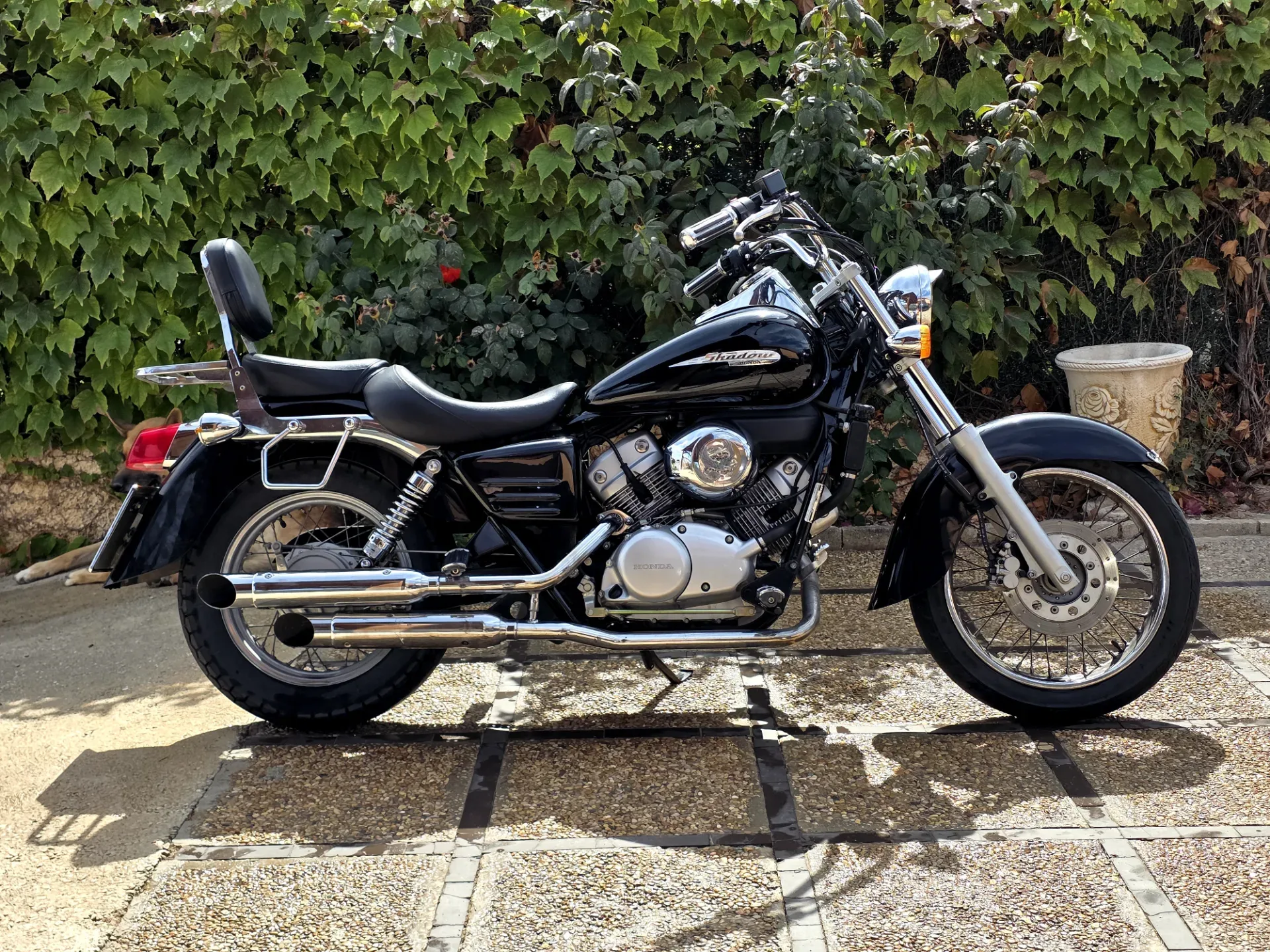
Yamaha
Effectively level with Honda on both reliability and sales. Its reputation is for conservative engineering: it puts durability ahead of risky innovation, and that shows in models that have spent a decade on the market almost unchanged because there is no need to touch them. The NMAX 125 is the best-selling motorcycle in Spain in 2026.

Suzuki
The quietest of the four Japanese brands when it comes to marketing, but with the same mechanical solidity. Models such as the V-Strom 650 or the GSX-S750 show that you can have real power without sacrificing reliability or sending maintenance costs soaring.
Kawasaki
On user forums (comparisons between the four Japanese brands are a perennial favourite), one point that keeps coming up is that Kawasaki has a touch more character in the way it rides—a little more vibration and response, the feel of a more “alive” machine—without that costing it any reliability: its four-cylinder engines keep their performance for years.

BMW
It is the benchmark of the adventure/trail segment (the GS range) and of the long-distance touring motorcycle, with the most advanced technology on the market: traction control, electronic suspension, connectivity. That same sophistication explains the highest fault rate in the study: the more electronic systems a motorcycle carries, the more there is that can fail. In return, buyers know what they are looking for and rarely regret it.

KTM
A long-standing off-road and enduro specialist with a very distinct identity (“Ready to Race”) that shows in the character of its engines. Maintenance is somewhat more demanding than on an equivalent Japanese motorcycle, in keeping with its sportier character and the fact that it is less geared towards carefree everyday use.
Ducati
It is the Italian brand that carries the most weight in the popular imagination: a racing heritage (MotoGP, Superbikes) and a character that does not set out to be the easiest motorcycle to ride, but the most exciting. That emphasis on performance explains one of the highest fault rates in the study (33%): this is not a motorcycle designed for those whose priority is staying out of the workshop.

Triumph
The British classic reinvented: motorcycles with retro styling (Bonneville, Scrambler) and modern mechanics. Mid-range reliability, ahead of the Italian brands and behind the Japanese ones, with a following whose loyalty to the brand goes beyond the spec sheet.

Harley-Davidson
It is the clearest case that reliability is not the only criterion: it has one of the highest fault rates in the study and yet one of the largest and most active owner communities in the world (H.O.G., Harley Owners Group). People who buy a Harley are not comparing engines: they are comparing identity, sound and belonging to a club. It is the right answer to “which is the best brand?” only if the real question is “which is the best cruiser brand?”

Chinese brands: Zontes, Voge, CFMoto, QJ Motor
This is the biggest change in the market in the last two years, and the one that is hardest to settle with long-term reliability data, because that data does not exist yet: these brands have not been on the road in Spain for long enough to know how they age at 80,000 km. What can be verified is that they offer much more equipment (upside-down forks, TFT display, quickshifter) at prices well below those of an equivalent Japanese or European motorcycle, that their market share is already 29%, and that their network of workshops and spare parts, although it is growing fast, still does not match the one Honda and Yamaha have after decades in the country. Recommended maintenance intervals also tend to be shorter (5,000-6,000 km). For those who put price first and do not mind relying on fewer workshops, they are a real option; for those who will be clocking up a lot of kilometres and want the peace of mind of being able to get spare parts anywhere, a Japanese motorcycle still makes the stronger case.
What we see ourselves, motorcycle by motorcycle
Besides what the studies say, we have our own data: between February and September 2026 we valued 393 motorcycles in Elche and its province. The brands people most often bring to us for valuation are, in this order, Yamaha, Honda, Suzuki, Kawasaki, BMW and Kymco, followed by KTM and Piaggio. Honda and Yamaha match the two best-selling brands in the country according to ANESDOR; Chinese brands, which already account for 29% of registrations, do not yet appear among the ones we value most often. It is a figure on what is actually bought and sold day to day, not an opinion survey, and that is why we share it with the caveat it deserves: 393 valuations from one specific area, not a national sample.
Frequently asked questions
What is the best motorcycle brand?
There is no single best brand. If the criterion is reliability and maintenance cost, Honda and Yamaha top any serious comparison. If it is touring and clocking up kilometres, BMW is the benchmark. If it is identity and character, Harley-Davidson. The “best” depends on what you want it for.
Which motorcycle brand is the most reliable?
According to the benchmark study (Consumer Reports), Yamaha, Suzuki and Honda record the fewest serious faults, with rates of between 11% and 12%. The four Japanese brands (counting Kawasaki) are consistently the most reliable on the market.
What is the best-selling motorcycle brand in Spain?
Honda, with 54,055 units registered in 2025 (21.4% of the market), ahead of Yamaha with 35,370 (14.1%).
Is it worth buying a Chinese motorcycle (Zontes, Voge, CFMoto)?
It depends on your priority. They offer more equipment for less money and already make up 29% of the Spanish market, but they have not been on the road long enough for their long-term reliability to be known, and their network of workshops, although it is growing fast, is still smaller than that of Honda or Yamaha.
Which brand sells best on the used motorcycle market?
The brands that sell the most new are also the ones with the highest turnover on the used market: in our own valuation history, the brands whose used motorcycles we move the most are, in that order, Yamaha, Honda, Suzuki, Kawasaki and BMW.
If you own one of these brands and are thinking of changing your motorcycle, you can get yours valued for free or browse the ones we currently have available in the used motorcycle catalogue.